
Blog
IVA vs Debt Management Plan: What's the Difference?
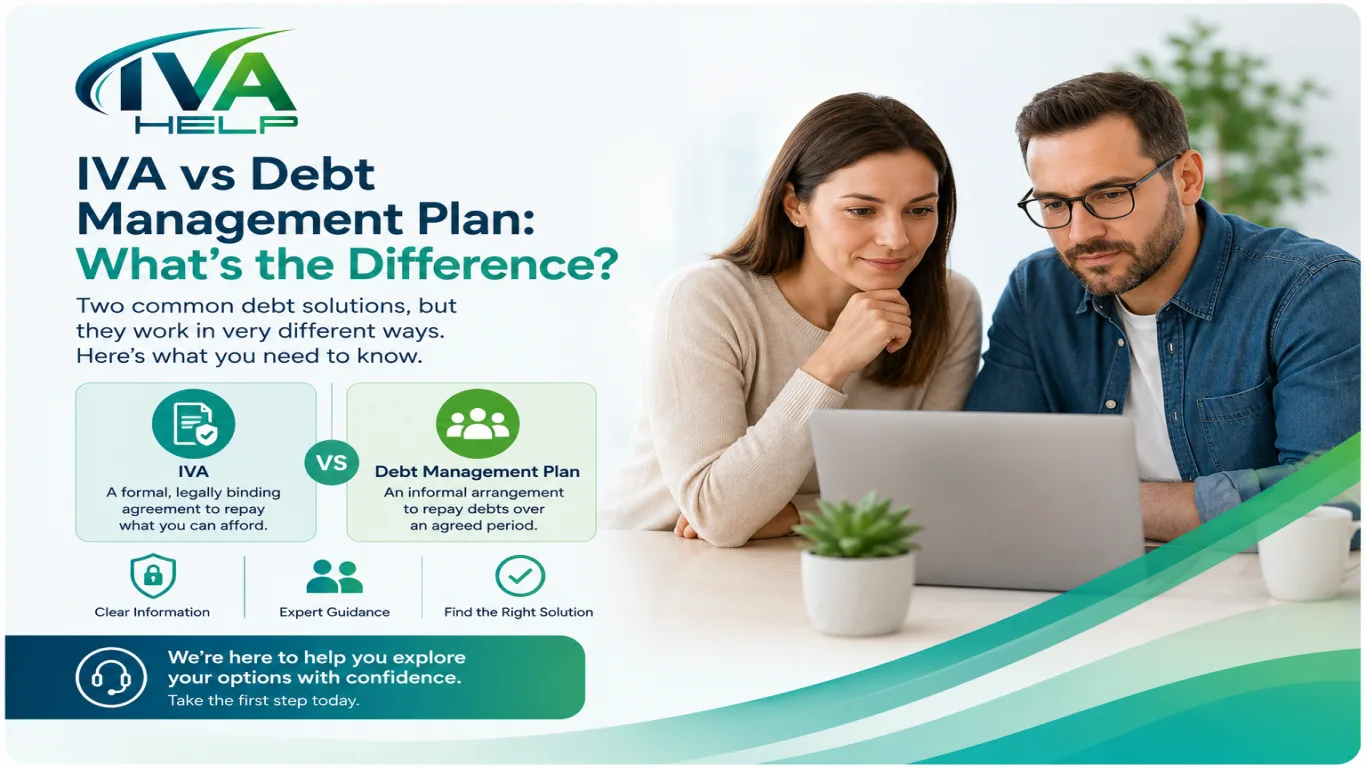
Understanding the differences between an Individual Voluntary Arrangement (IVA) and a Debt Management Plan (DMP) can help you make informed decisions about managing your debt.
Introduction
When facing financial stress, understanding your options for managing debt is crucial. Two common solutions in the UK are Individual Voluntary Arrangements (IVAs) and Debt Management Plans (DMPs). While both aim to help individuals manage their debts, they operate in different ways and have distinct implications. This guide will help clarify the differences between IVAs and DMPs, enabling you to make an informed decision based on your individual circumstances.
What is an Individual Voluntary Arrangement (IVA)?
An IVA is a formal agreement between you and your creditors to pay back a portion of your debts over a set period, usually five to six years. It is legally binding, meaning that once approved, your creditors cannot pursue you for the remaining debt included in the IVA.
Key Features of an IVA
- Legally Binding: Once an IVA is approved, it is legally binding on both you and your creditors.
- Fixed Payment Plan: You will make regular payments based on what you can afford, typically for five to six years.
- Debt Write-off: Any remaining debt after the IVA term may be written off.
- Impact on Credit Rating: An IVA will affect your credit rating and remain on your credit file for six years from the date it is approved.
What is a Debt Management Plan (DMP)?
A DMP is an informal agreement between you and your creditors to pay back your debts at a rate you can afford. Unlike an IVA, a DMP is not legally binding, meaning creditors can still pursue you for the full amount owed.
Key Features of a DMP
- Informal Arrangement: A DMP is not legally binding, and creditors can choose to accept or reject your proposal.
- Flexible Payments: You can adjust your payments based on your financial situation.
- No Debt Write-off: You are expected to repay the full amount of your debts, although creditors may agree to freeze interest and charges.
- Impact on Credit Rating: A DMP may also affect your credit rating, but it is generally less severe than an IVA.
Comparing IVAs and DMPs
Here’s a comparison of IVAs and DMPs based on several key factors:
1. Legal Status
- IVA: Legally binding agreement.
- DMP: Informal agreement.
2. Duration
- IVA: Typically lasts five to six years.
- DMP: Ongoing until debts are repaid.
3. Debt Repayment
- IVA: A portion of your debt may be written off after the term.
- DMP: Full repayment of debts is expected.
4. Impact on Credit Rating
- IVA: Remains on your credit file for six years.
- DMP: May affect your credit rating but generally less severe.
Practical Examples
To illustrate the differences further, consider the following scenarios:
Scenario 1: Sarah's Financial Situation
Sarah has £30,000 in unsecured debt and is struggling to make her monthly payments. After consulting with a debt advisor, she learns that an IVA could allow her to pay back a portion of her debt over five years, with the remaining balance potentially written off.
Scenario 2: Tom's Financial Situation
Tom has £15,000 in debt but is currently in a stable job and can afford to make regular payments. He opts for a DMP, allowing him to repay his debts at a manageable rate without the formalities of an IVA.
Conclusion
Choosing between an IVA and a DMP depends on your personal financial situation and preferences. An IVA may be suitable if you have significant debt and want a structured repayment plan with the possibility of debt write-off. Conversely, a DMP might be a better fit if you prefer flexibility and are committed to repaying your debts in full.
It's essential to seek advice from a qualified debt advisor to explore your options and find the best solution for your circumstances.
Check Your Options
If you're feeling overwhelmed by financial stress, consider reaching out for support. Check your options today to learn more about the solutions available to you.
Need help with your situation?
Complete the online assessment or request a confidential callback without leaving this article.
Next step
Eligibility depends on individual circumstances. Get clear information before deciding.
Check your options